
Your crypto exchange has until July 1, 2026 to secure MiCA authorisation—or shut down EU operations entirely. The transitional period ends, no exceptions. Regulators have already issued €540 million in fines since partial implementation began. Meanwhile, Galaxy Research predicts stablecoin transaction volume will surpass the US ACH system for the first time in 2026. This isn’t incremental change. It’s structural transformation.
TL;DR: MiCA’s transitional period ends July 2026—unlicensed crypto operators face immediate business disruption in the EU. The stablecoin market is projected to exceed $500 billion, with nine major European banks launching a regulated euro stablecoin in H2 2026. Project Nexus goes live connecting 1.7 billion people to instant cross-border payments within 60 seconds. AI agents will autonomously manage approximately one-third of B2B payment workflows by year-end. For high-risk industries, 2026 brings both unprecedented opportunity and intensified compliance obligations.
Key Takeaways
- The GENIUS Act creates the first US federal stablecoin framework requiring 100% reserve backing
- SWIFT’s ISO 20022 coexistence ends November 2026—legacy MT messages face surcharges from January
- FedNow has grown to 1,500+ institutions processing $245 billion quarterly (49,000% YoY growth)
- DORA affects 22,200+ financial entities with mandatory ICT risk management requirements
- Visa, Mastercard, and Google have all launched AI agent payment protocols
- JPMorgan launched deposit tokens on public blockchain—a major banking first
What Regulatory Changes Will Reshape Payments in 2026?
Three major frameworks hit critical milestones simultaneously—MiCA for crypto, the GENIUS Act for US stablecoins, and the EU AI Act for automated financial decision-making. Compliance deadlines are stacking.
MiCA reaches its endpoint. The transitional period ends July 1, 2026, requiring all crypto-asset service providers in the EU to hold full authorisation. Those without licenses face immediate business disruption. France has issued the largest single penalty at €62 million. Tether faces potential delisting from some EU exchanges due to reserve transparency requirements—creating opportunities for compliant alternatives.
The response from traditional finance is telling: nine major European banks including ING, UniCredit, CaixaBank, and Danske Bank are launching a MiCA-regulated euro stablecoin in H2 2026. Traditional finance isn’t fighting tokenisation—it’s embracing it under regulatory cover.
In the United States, the GENIUS Act (signed July 2025) establishes the first comprehensive federal stablecoin framework. Permitted issuers must maintain 100% reserve backing with liquid assets, publish monthly attestations from public accounting firms, and implement Bank Secrecy Act compliance including AML/KYC requirements. By July 2028, digital asset service providers can only offer payment stablecoins from permitted issuers.
The EU AI Act brings high-risk AI system requirements into force by August 2026, though the Digital Omnibus package may delay full implementation to December 2027. Credit scoring, underwriting, and fraud detection systems fall under enhanced governance requirements, with fines reaching 7% of global annual turnover for non-compliance.
For compliance officers, the message is clear: map your exposure across all three frameworks now.
How Will Real-Time Payments Transform Cross-Border Transactions?
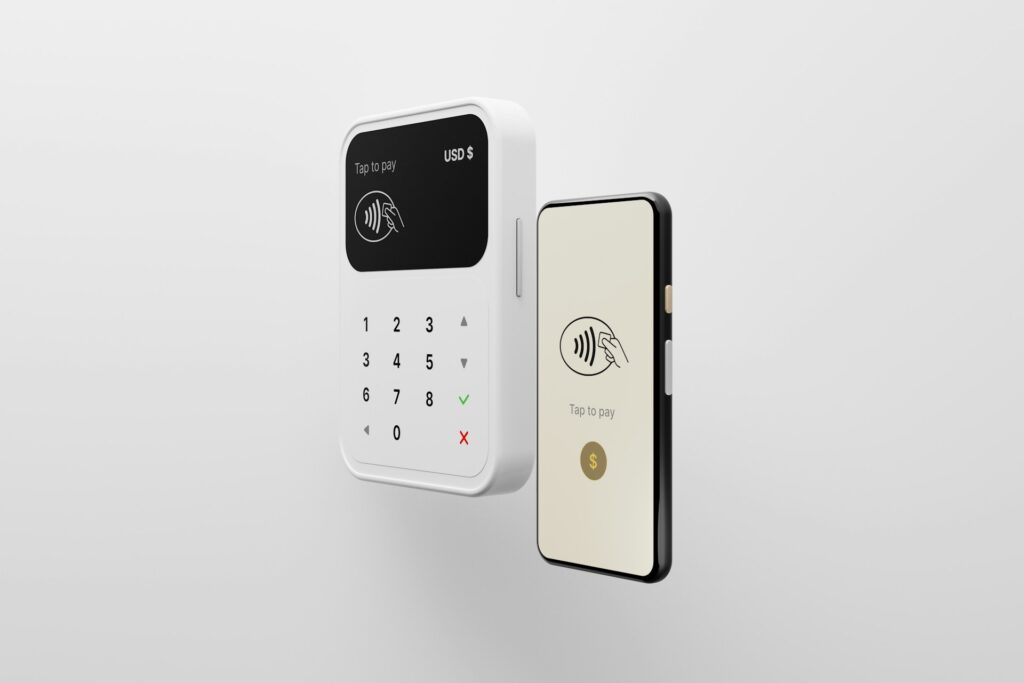
Project Nexus goes live in 2026, connecting 1.7 billion people to instant cross-border payments. SWIFT’s ISO 20022 migration reaches critical deadlines. Instant settlement is becoming the baseline, not the exception.
Project Nexus is the game-changer. The BIS-led initiative connects instant payment systems across India (UPI), Malaysia, Philippines, Singapore, and Thailand—with cross-border payments completed within 60 seconds. BIS General Manager Agustín Carstens notes that “even with just the first wave of connected countries, Nexus has the potential to facilitate easy and cost-effective instant payments” for 1.7 billion people.
SWIFT’s ISO 20022 migration reaches critical milestones. By November 2026, unstructured postal addresses will be retired and SWIFT Case Management messages become mandatory. Institutions still sending legacy MT messages face contingency processing charges starting January 2026. The standard now processes 80% of high-value clearing and settlement across 70+ countries.
FedNow’s growth has been explosive. The system has expanded to over 1,500 participating financial institutions (up from 35 at July 2023 launch), processing $245 billion in Q2 2025—a 49,000% year-over-year increase. Transaction limits have risen to $10 million, enabling high-value B2B settlements. Emerging use cases include merchant refunds, insurance claims, and gaming transactions.
Brazil’s PIX continues its dominance with nearly 7.3 billion monthly transactions and 93% adult population adoption. SEPA Instant became mandatory across the eurozone from October 2025, with 10-second settlement windows creating new standards for European operators.
If you’re still operating on 3-5 day settlement windows, you’re increasingly uncompetitive.
What Does the Stablecoin Explosion Mean for High-Risk Industries?

The stablecoin market is projected to exceed $500 billion in 2026, with institutional adoption accelerating. For high-risk industries facing banking access challenges, regulated stablecoins offer practical alternatives to traditional payment rails.
The market has reached approximately $309 billion in market capitalisation, with projections to exceed $500 billion in 2026 and potentially $2 trillion by 2028. Galaxy Research predicts stablecoin transaction volume will surpass the US ACH system in 2026—a watershed moment for digital payment infrastructure.
Institutional moves are accelerating. Circle’s USDC received Visa integration in December 2025, enabling US card issuers to settle VisaNet obligations in USDC. Circle’s OCC conditional national trust bank charter represents the first stablecoin issuer achieving this status. JPMorgan’s Kinexys platform processes approximately $2 billion daily and has moved over $1.5 trillion since launch.
In December 2025, JPMorgan launched JPM Coin (JPMD) on Coinbase’s Base network—the first time a major bank offered deposit tokens on public blockchain infrastructure. These represent tokenised claims on bank deposits that can earn interest, unlike regulatory-constrained stablecoins.
Cross-border stablecoin payments are scaling rapidly in underserved corridors. Africa sees nearly $25 billion in monthly on-chain stablecoin volume, while Southeast Asia reports 36% year-over-year growth. Tether processed $156 billion in sub-$1,000 payments in 2025 for remittances, payroll, and retail—demonstrating practical utility beyond trading.
How Will AI Agents Change the Way Payments Work?
Visa, Mastercard, and Google have all launched protocols for AI agents to autonomously initiate payments. Forrester projects approximately one-third of B2B payment workflows will use autonomous AI agents by end of 2026.
The protocol race is underway. Visa’s Intelligent Commerce (launched April 2025) enables AI agents to find, shop, and buy on behalf of consumers using AI-ready tokenised cards, partnering with OpenAI, Anthropic, Microsoft, and IBM. Mastercard’s Agent Pay introduces agentic tokens building on mobile payment tokenisation. Google’s Agent Payments Protocol (AP2) has attracted support from over 60 organisations including Adobe, PayPal, Coinbase, and Klarna.
Visa’s Jack Forestell captures the shift: “Just like the shift from physical shopping to online, and from online to mobile, Visa is setting a new standard for a new era of commerce. Soon people will have AI agents browse, select, purchase and manage on their behalf.”
B2B will lead adoption. Forrester projects approximately one-third of B2B payment workflows will use autonomous AI agents by end of 2026—automating invoice matching, payment reconciliation, cross-border FX optimisation, and dispute resolution. Consumer trust is lagging: only 24% of US consumers currently trust AI to make routine purchases.
In credit decisioning, 20% of credit risk executives have already implemented generative AI use cases. Banks using AI underwriting report 50-75% reductions in time-to-decision and handle 3-4x more loan applications with the same staff.
The strategic question for payment processors: are your systems ready to accept transactions initiated by AI agents rather than humans?
What Payment Solutions Are Emerging for Crypto, Forex, and iGaming?
Banking access is improving for crypto with Morgan Stanley and PNC entering the market. Forex brokers face new ASIC qualification standards. iGaming sees crypto comprising 7% of payments with major state expansions expected.
Crypto exchanges are gaining mainstream banking access. Morgan Stanley plans to launch crypto trading on its E-Trade platform in 2026, while PNC Bank announced a partnership with Coinbase for retail crypto trading. Beginning January 2026, banks must disclose digital asset exposure—signalling closer integration of traditional and crypto finance. Grayscale expects bipartisan crypto market structure legislation to become US law in 2026.
Forex and CFD brokers face intensified regulatory requirements. Australia’s ASIC is implementing new adviser qualification standards by January 2026. Payment processors serving forex now support 179+ processing currencies with localised methods including SEPA for Europe, PIX for Brazil, and Alipay for China. Crypto payment gateways offering 1:1 stablecoin/USD conversion are becoming standard, enabling hybrid fiat-crypto treasury management.
iGaming sees crypto transactions comprising approximately 7% of all online gambling payments, with Stake.com logging $1.1 billion in monthly crypto deposits. iGaming revenue grew 29.7% year-over-year in Q3 2025. Massachusetts bill H 4431 proposes a January 1, 2026 effective date, with the state expecting $250 million in annual tax revenue. New York and Illinois represent additional high-probability expansion states.
Money service businesses may see relief from systematic debanking. The White House’s August 2025 executive order directs regulators to eliminate “reputation risk” from examination guidance. The SBA ordered 5,000 lenders to identify past debanking actions by January 5, 2026.
What Infrastructure Risks Require Attention in 2026?

The CrowdStrike outage caused $10 billion in damages and reshaped resilience conversations. DORA is now in force affecting 22,200+ financial entities. Cloud concentration risk remains elevated with 88% of IT executives expecting another major incident.
The July 2024 CrowdStrike outage affecting 8.5 million Windows devices and causing $10 billion in global damages reshaped conversations about operational resilience. Banks including Bank of America, Chase, Capital One, and Wells Fargo experienced disruptions. Delta Airlines alone reported $500 million in losses.
DORA (Digital Operational Resilience Act) entered into force January 17, 2025, affecting over 22,200 financial entities and IT service providers. Requirements include comprehensive ICT risk management frameworks, incident reporting to competent authorities, periodic threat-led penetration testing, and specific contractual provisions with ICT service providers. Critical third-party providers were designated November 2025.
Cloud concentration risk remains elevated. AWS, Microsoft Azure, and Google Cloud’s dominance means a quarter of major banks’ activities and nearly a third of UK payments activity runs on cloud infrastructure. The Bank of England’s Mark Carney noted that two providers account for nearly half of cloud computing revenues. Multi-cloud strategies are becoming more common, but 88% of IT executives expect another major incident as large as CrowdStrike within the next year.
What Contrarian Predictions Could Reshape Strategy?
McKinsey warns payments are fragmenting rather than globalising. Cash isn’t disappearing—$11 trillion remains in circulation. Stablecoins may remain transaction bridges rather than stores of value.
Several experts challenge consensus narratives. McKinsey warns that payments are moving toward fragmentation and regionalisation, not greater global integration: “A return to the fully globalized payment systems of just five years ago seems unlikely.” Geopolitical tensions are driving countries to develop parallel payment infrastructures.
Despite digital payment growth, approximately $11 trillion in paper money remains globally. Visa explicitly states cash “is not going to disappear any time soon”—the last mile of cash displacement may take longer than expected, particularly in Germany, Japan, and emerging markets.
The stablecoin caveat often overlooked: McKinsey notes that for stablecoins to achieve widespread adoption, “end-user perceptions must change from that of a temporary bridge between fiat currencies to a form of money to be held.” If stablecoins remain primarily transaction bridges, their disruptive impact on traditional banking may be more limited.
For B2B payments automation, Bottomline’s Gunita Bindra warns: “The days of easy wins with automation are done. CFOs and AP leaders must now formalize measurement.” Organisations that cannot demonstrate measurable ROI face budget cuts.
What Should CFOs and Compliance Officers Prioritise Now?
Map regulatory exposure across MiCA, GENIUS Act, and EU AI Act. Evaluate stablecoin payment rails for cross-border efficiency. Prepare systems for AI agent transactions. Ensure DORA-compliant operational resilience.
- Map your regulatory exposure. MiCA (July 2026), GENIUS Act deadlines, EU AI Act requirements—identify which apply and build compliance timelines now.
- Evaluate stablecoin payment rails. For cross-border operations, regulated stablecoins may offer cost and speed advantages over traditional correspondent banking.
- Prepare for AI agent transactions. Understand how your systems will authenticate and process payments initiated by AI rather than humans.
- Stress-test operational resilience. DORA compliance is mandatory; even outside the EU, the CrowdStrike incident proved cloud concentration risks are real.
- Watch the ISO 20022 deadline. November 2026 is the end of coexistence—legacy messaging will cost you.
ACI Worldwide’s Philip Bruno captures the moment: “In 2026, payments disruption won’t be incremental—it will be structural. Real-time is now the baseline, digital assets are entering regulated ecosystems, and AI is transforming every layer of the value chain.”
How Capitalixe Can Help Navigate 2026's Transformation
Capitalixe specialises in connecting businesses to payment and banking solutions across 140+ countries, with deep expertise in navigating the regulatory complexity that defines 2026. From MiCA-compliant crypto banking to real-time cross-border payment rails, our global network includes partners positioned for the structural changes ahead.
Whether you’re a crypto exchange preparing for July’s deadline or a forex broker evaluating stablecoin treasury options, Capitalixe’s complimentary advisory services help you identify partners whose capabilities match both your current operations and 2026’s evolving requirements.
Ready to navigate 2026’s payment transformation? Contact Capitalixe today for a free, non-obligatory consultation on positioning your business for the year ahead.
2026 is the year when regulatory clarity, infrastructure transformation, and AI adoption converge—the businesses that prepare now will define the next era of global payments.
Frequently asked questions (FAQs)
What is the most significant change expected in global payments for 2026?
The shift from card-based transactions to Account-to-Account (A2A) payments is the most transformative trend for 2026. Driven by Open Banking and regulations like PSD3, A2A allows for instant settlement and lower transaction fees, challenging the long-standing dominance of traditional card networks.
How will Agentic AI impact the finance industry in 2026?
2026 marks the rise of Agentic Commerce, where AI agents autonomously initiate and execute transactions on behalf of consumers and businesses. This moves beyond simple “chatbots” to intelligent systems that can manage subscriptions, negotiate better rates, and handle b2b procurement without human intervention.
Are stablecoins becoming a mainstream payment method in 2026?
What are the top payment security threats to watch for in 2026?
The primary threat is AI-driven identity fraud, specifically deepfakes and synthetic identity scams. As criminals use generative AI to bypass traditional KYC (Know Your Customer) checks, 2026 will see a massive industry-wide shift toward Biometric Verification and Digital Identity Wallets as the only reliable defence.
Will physical cash become obsolete by 2026?
While digital wallets are projected to reach a 21% share of UK transaction volume by 2026, cash remains a critical backup. Data shows that while cash usage is declining, it remains a resilient “fail-safe” for consumers concerned with privacy or system outages, ensuring it won’t be fully obsolete by 2026.